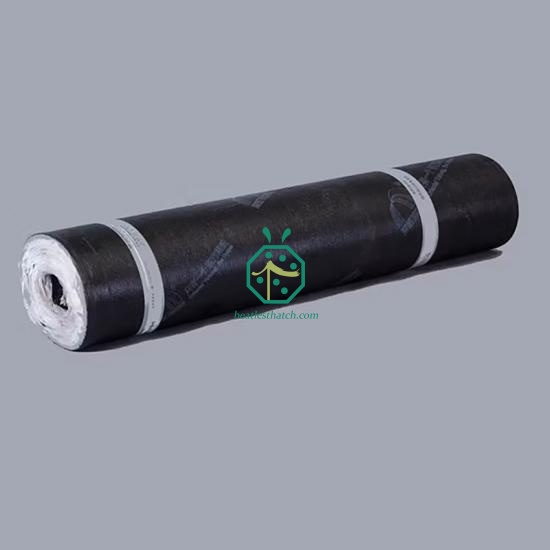
This product is a high weather-durability self-adhesive bituminous waterproofing membrane, it is important for tropical area thatch roof installation. It is consists of a high-tack rubberized asphalt adhesive covered with weather-resistant fluorocarbon laminatedfilm. The rubberized asphalt surface is backed with a release liner. This product is particularly suitable forlong-term exposed cool roof waterproofing application.
Where to Use
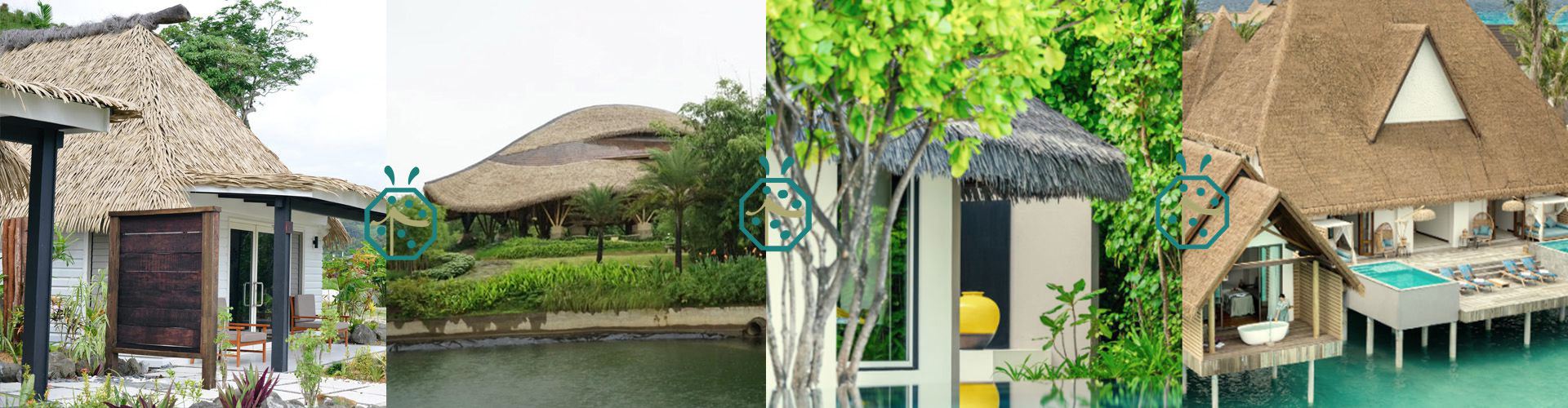
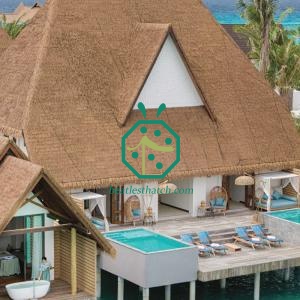
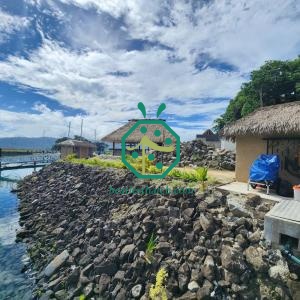
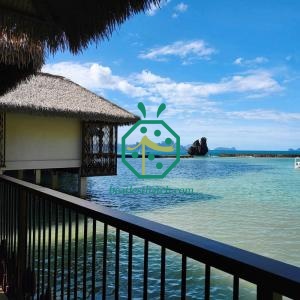
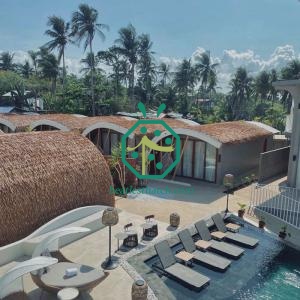
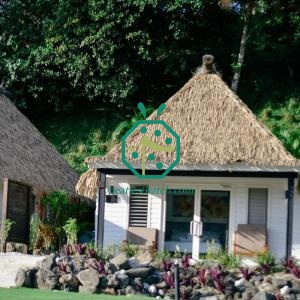
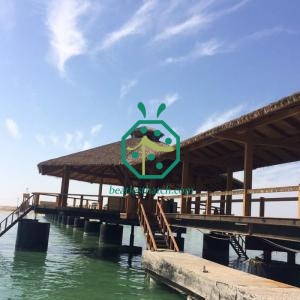
It is specifically engineered as a durable exposed waterproofing membrane for flat or slopedroofs with minimal pedestrian traffic. It is ideally suited for refurbishment of concrete roofs, metal roofs,bitumen membrane roofs, photovoltaic roofs and other roof waterproofing applications. For the tropical areas' applications, such as Maldives resort bungalow roof installation, or Philippines nipa hut construction, it plays critical roles for making sure the properties' waterproof performance.
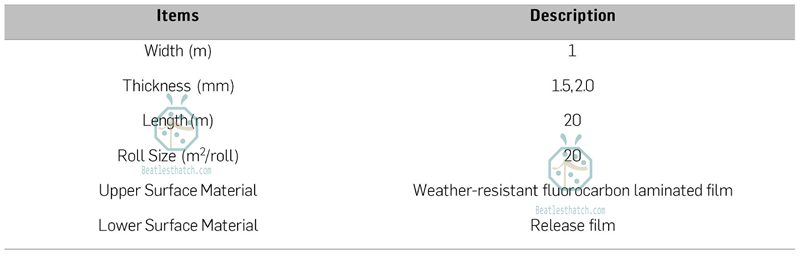
Parameters
How to Choose Bituminous Waterproof Membrane
There are various types of bituminous waterproof membrane, for tropical ocean countries, it is better to choose according to below indexes:
◮ Modifier:
Preferred APP modified bitumen waterproofing membrane, which offers excellent high-temperature resistance and is less prone to flowing or sagging under heat. Ideal for hot climates and roofs with intense solar radiation. As most synthetic thatch roof buildings locate at tropical countries, APP modified type is more suitable.
◮ Carrier type:
Preferred Polyester Mat (PY): Compared to fiberglass mat, polyester mat offers higher tensile strength and elongation, making it better suited to accommodate the thermal expansion and contraction that buildings may experience.
◮ Thickness:
Suggest the membrane thickness to be more than 4mm to avoid the damage of the membrane during the installation and cause leakage.
How to Judge the Quality
Remember this simple three-step method: "Check, Look, and Tear"
◮ Check the labeling:
Genuine products must have standard codes (e.g., GB 18242-2008), carrier type (e.g., PY), surface material (e.g., PE), and other information printed on the packaging.
◮ Inspect the appearance:
Unroll the membrane—the surface should be smooth, free of bubbles, holes, and adhesion, with uniform thickness.
◮ Tear the edge:
Tear the edge by hand; polyester mat is very difficult to tear. If it tears easily, it indicates insufficient carrier strength.
Special Construction Reminders
Choosing the right material is only half the battle—construction details are equally critical. Keep the following points in mind during installation:
◮ Prioritize the heat fusion method:
Using the heat fusion method ensures full and firm adhesion between the membrane and substrate, with reliable sealing at seams.
◮ Prepare the substrate properly:
Before construction, ensure the roof substrate is dry, level, and clean—this is essential for achieving the final waterproofing performance.
◮ Strictly control weather conditions:
Construction is prohibited during rainy days or when wind speeds exceed Level 5. The Maldives has changeable weather, so monitor the forecast in advance and allow sufficient working windows.



 IPv6 network supported