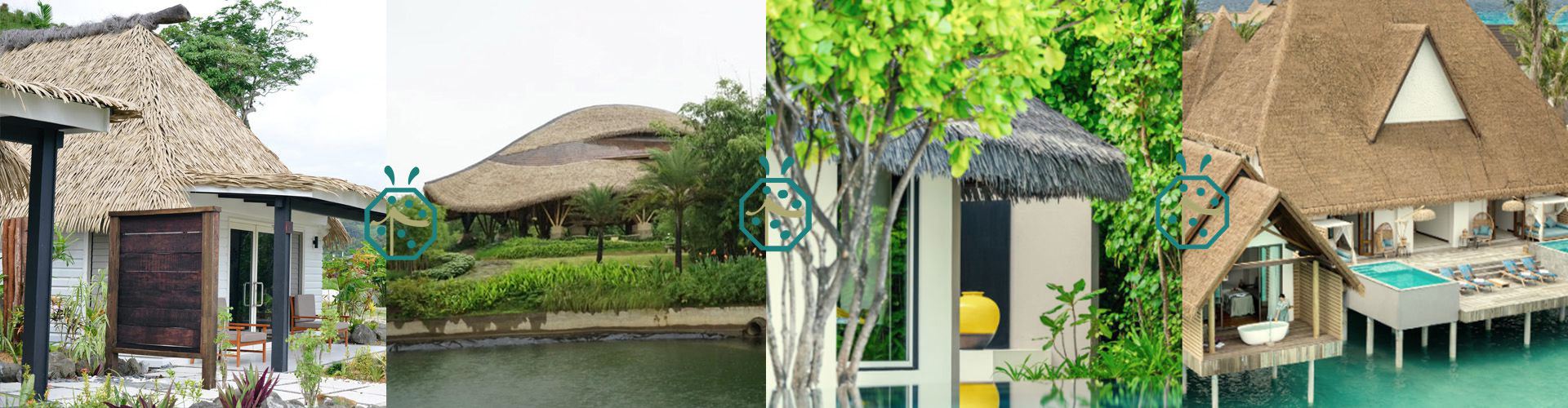
Beatles Thatch recently completed a synthetic straw thatch roofing project for the famous NAGOYA LITTLE WORLD PROJECT, located in Yamagata Prefecture, Japan. The project involved approximately 900 square meters of roofing installation using synthetic straw main thatch panels and matching eave thatch components. Designed to preserve the visual appearance of traditional Japanese rural architecture while improving long-term durability, the project combined authentic aesthetics with modern roofing performance.
The featured farmhouse is located near Mount Gassan in the Dewa Mountain region, one of Japan’s most well-known heavy snowfall areas. Originally constructed in 1767 during the mid-Edo period, the building began as a simple four-room farmhouse before being expanded during the Meiji era with additional entrances, guest rooms, corridors, and upper-floor spaces. This distinctive L-shaped “Chumon-zukuri” style farmhouse is commonly found in snowy regions such as Akita and Niigata, representing an important part of traditional Japanese architectural heritage. Over time, however, the original natural thatch roof suffered severe aging, moisture damage, and decay due to long-term exposure to harsh weather conditions. The restoration team therefore selected synthetic straw thatch roofing as a more durable and visually consistent alternative.
Compared with traditional natural straw roofing, synthetic thatch offers several long-term advantages for heritage-style projects and public cultural attractions:
● Improved durability in heavy snow and humid environments
● Reduced maintenance and replacement frequency
● Better resistance to moisture and biological decay
● Consistent appearance over time
● Fire-retardant performance for enhanced safety
● Authentic traditional straw roof aesthetics
The goal of the project was to maintain the historic appearance of the farmhouse while creating a roofing system capable of withstanding Japan’s demanding climate conditions.
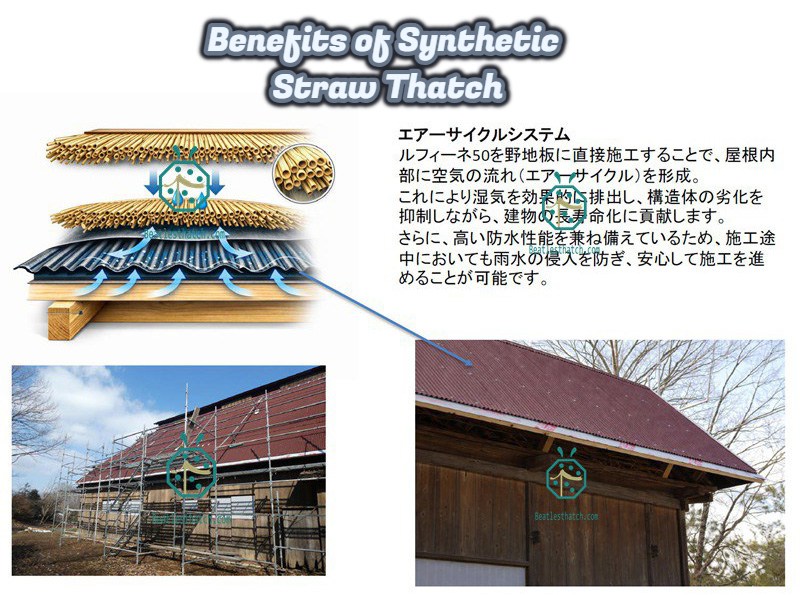
One of the key technical requirements of this project was achieving a highly natural appearance around the eave sections. The client specifically requested that the gaps between eave thatch components remain as visually seamless as possible. To address this, customized installation detailing and careful alignment of the synthetic eave thatch pieces were applied during construction. The final result successfully created a cleaner and more authentic traditional straw roof appearance, especially when viewed from lower angles around the building perimeter.
The roofing system included:
● Synthetic straw thatch main roofing panels
● Synthetic eave thatch components
● Traditional-style layered roof detailing
● Fire-retardant synthetic roofing materials
The complete system was designed to replicate the texture and depth of traditional Japanese thatched roofing while providing modern performance advantages.
The project gallery includes both installation progress photos and completed project images, showcasing:
● Traditional Japanese farmhouse architecture
● Synthetic straw roof installation details
● Eave finishing craftsmanship
● Completed heritage-style roofing appearance
● Long-span roof coverage in snowy-climate conditions
This project demonstrates how synthetic thatch roofing can help preserve the visual identity of historic and cultural buildings while significantly improving durability, safety, and maintenance performance. For museums, cultural parks, traditional villages, resorts, and heritage restoration projects, synthetic straw thatch provides a practical solution that balances authentic appearance with modern engineering requirements.
Welcome your inquiry to us
Tel: +8613400623179
Whatsapp: +8613400623179
Email : jack.lim@beatlesbm.com
Group 2, Zhaishang Village, Huli District, Xiamen, China
Get A Free Quote


Scan to Whatsapp:








 IPv6 network supported