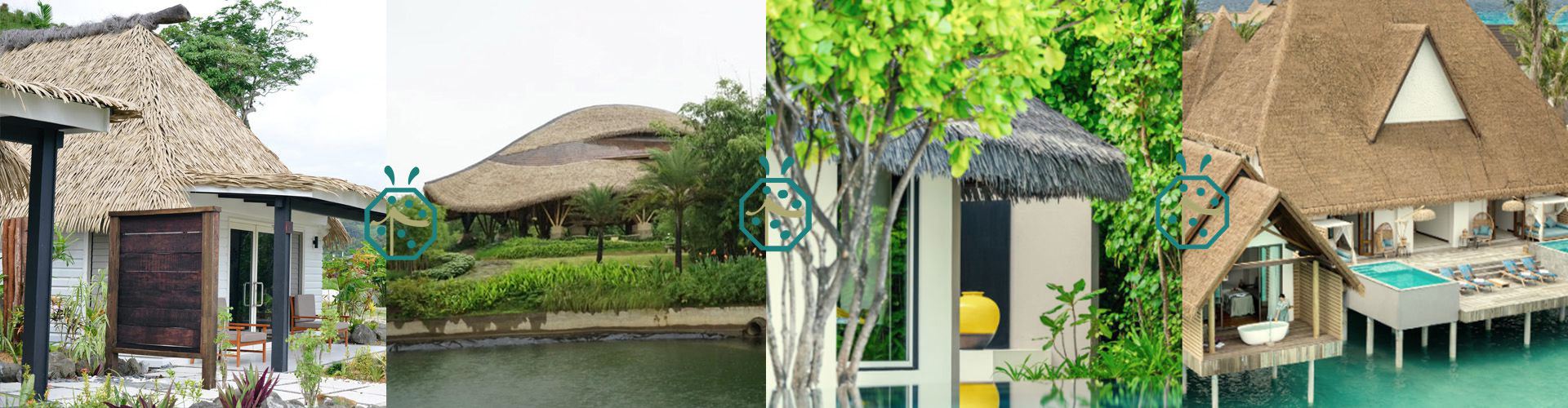
In many parts of Africa, when installing synthetic thatch roofs, MGO board (Magnesium Oxide Cement Board reinforced with fiberglass) is often chosen as the underlying substrate. This is primarily due to its fire resistance, moisture resistance, and durability, which perfectly address the safety challenges posed by the local climate and traditional thatch roofs.
Core Functions of MGO Board
Top-Tier Fire Resistance
This is the most critical reason. Many hotels in Africa use thatch roofs to create a "rustic luxury" ambiance, but natural thatch is a major fire hazard. MGO board is an A1-class non-combustible inorganic material. It does not burn when exposed to fire, effectively preventing fire spread and buying valuable time for evacuation and firefighting.
Excellent Moisture Resistance
Many parts of Africa have distinct wet and dry seasons, with high humidity levels. Ordinary panels can easily absorb moisture, leading to mold, deformation, and rot. MGO board has outstanding water and moisture resistance. It does not deform or lose strength even after prolonged soaking and effectively resists mold and insect/termite damage.
Strength and Durability
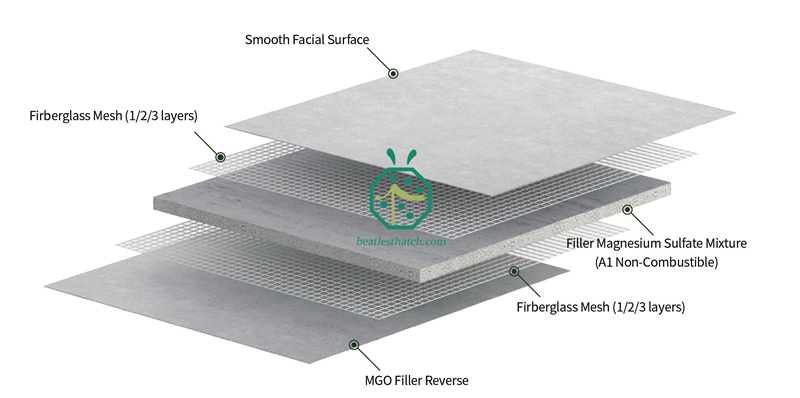
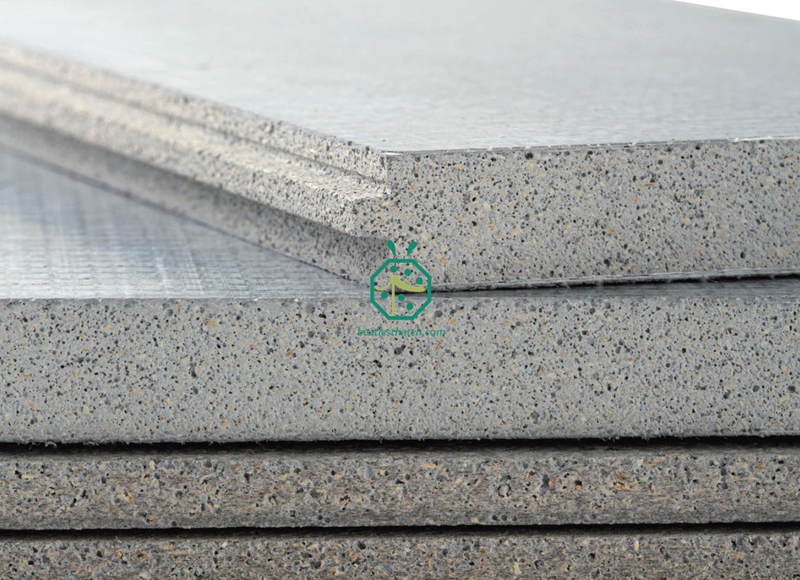
MGO board is reinforced with multiple layers of fiberglass mesh, giving it high strength to resist strong winds and impacts. As an inorganic mineral material, it resists termite damage and fungal corrosion, making it much more reliable than traditional wood panels.
Environmental Safety
MGO board is free from asbestos, formaldehyde, and other harmful substances during production and use, making it environmentally friendly and safe for human health. This is an added advantage in green building rating systems.
How is MGO Board Used in a Synthetic Thatch Roof?
It is not left exposed. Instead, the MGO board acts as a structural substrate hidden within the roof assembly:
● Install Base Layer: First, the MGO board is laid directly over the roof purlins or decking, creating a solid, flat base.
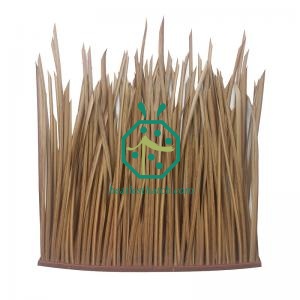
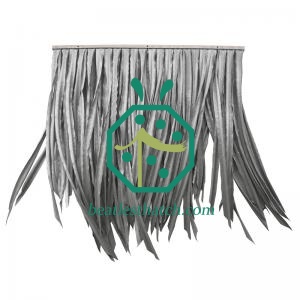
● Attach Thatch: The synthetic thatch is then securely fixed onto the MGO board using adhesives, nails, screws, or wire ties.
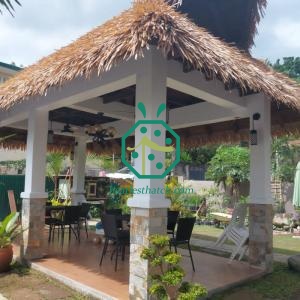
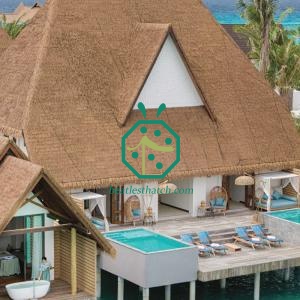
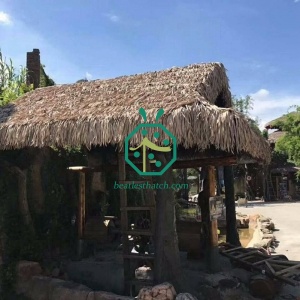
● Final Result: This creates a composite structure: a strong, stable base (MGO board) topped with a decorative finish (synthetic thatch). It is both aesthetically pleasing and safe.
It's worth noting that beyond being a base for thatch roofs, MGO board can also be used for fire-rated walls, acoustic partitions, ventilation ducts, and other areas with high fire safety requirements.
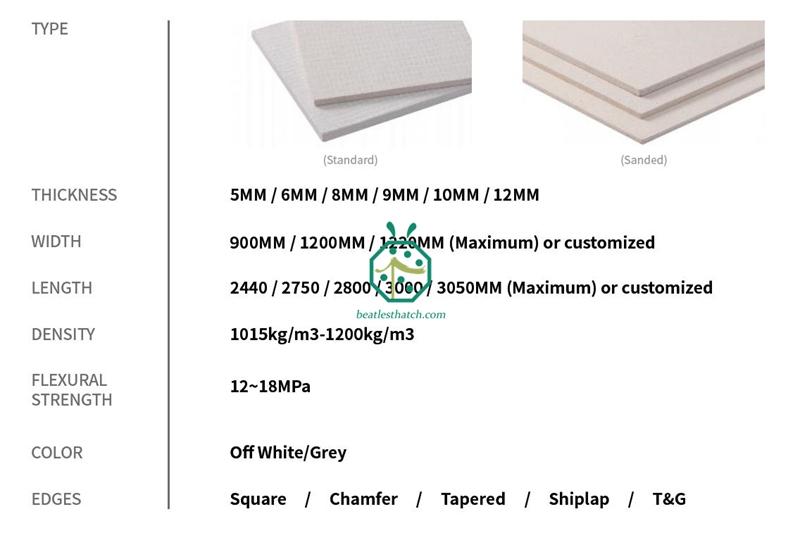
Parameters of MGO Board:
Structures of MGO Board:
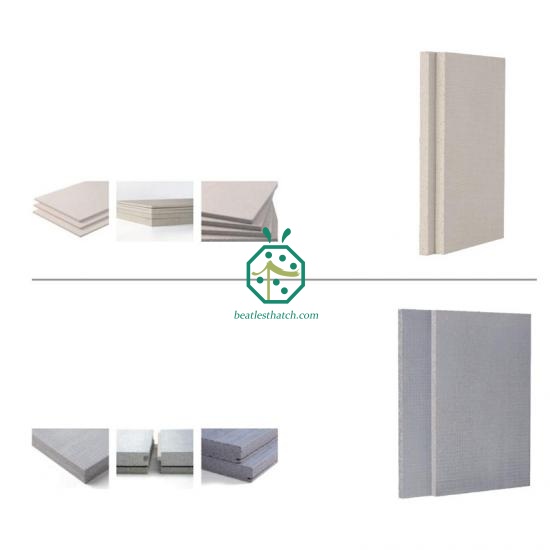
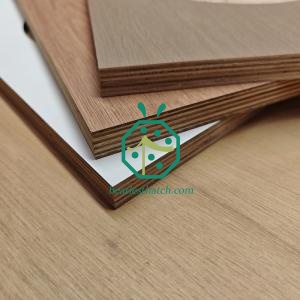
Product Photo of MGO Board:





 IPv6 network supported